
Naiʻa Lewis
Board Chair · Interim Executive Director
Naiʻa guides Big Ocean’s current transition and day-to-day work. naia@bigocean.global

Big Ocean is guided by people with direct experience managing, governing, researching, and building large ocean protection. The Board of Advisors sets direction; the operations team carries the work day to day.
To strengthen the global community of people committed to the care and guardianship of the world’s oceans, and particularly large ocean places, by connecting people, sharing knowledge, and carrying good practice from one place to the next.
The world’s large ocean places are globally recognized, their protection durable and led by those who guard and care for them, and their natural and cultural values sustained across generations.
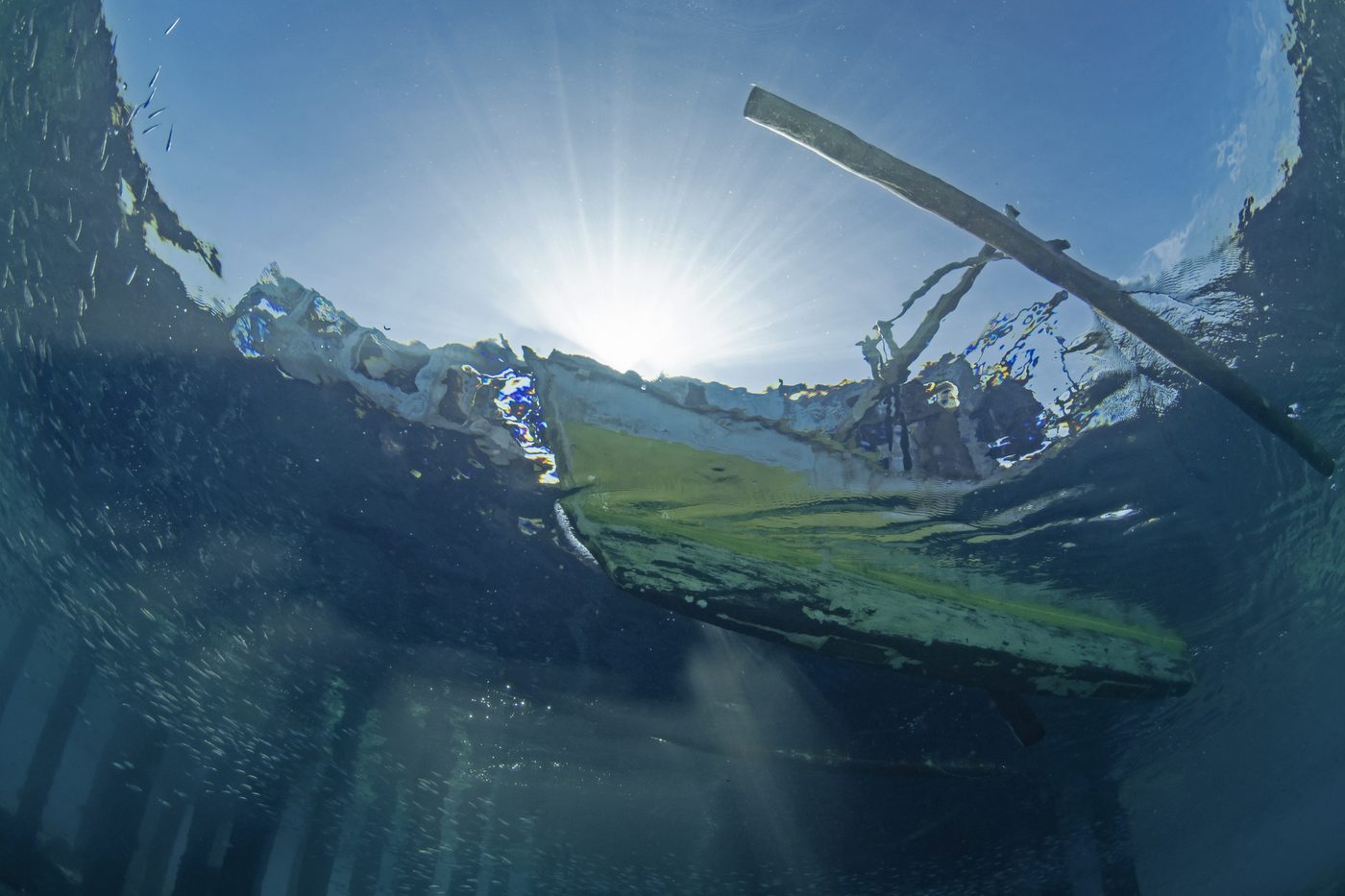
Big Ocean’s roots in Papahānaumokuākea carry a view of ocean management in which people are part of the ecosystem rather than outside it. Indigenous knowledge and guardianship are therefore not topics added to a technical management model. They shape how responsibility, authority, time, relationship, and knowledge are understood.
Management carries a formal mandate. Guardianship carries belonging. Good practice has to make room for both without treating one as a substitute for the other.
Standards for how Big Ocean convenes, partners, shares knowledge, and makes decisions.
Open a name to read the current biography. Advisors are listed alphabetically by last name.
Marine management and planning advisor
Dr Jon Day is a founding member of Big Ocean's Board of Advisors and has been involved with Big Ocean since 2010. Jon serves as the primary advisor to Big Ocean on marine management and planning. His professional career included 28 years planning and managing the Great Barrier Reef, including seven years in field management (QPWS Area/Regional Manager) and 16 years as one of the Directors at GBRMPA. As a GBRMPA Director, Jon's responsibilities included biodiversity conservation, park planning, heritage (particularly World Heritage), Indigenous Partnerships, and developing methodologies for the first GBR Outlook Report. His role in the GBR rezoning (1998–2004) led to Jon being awarded an Australian Public Service Medal. Today Jon is an Adjunct Principal Research Fellow at James Cook University and publishes primarily on marine management, planning, world heritage and climate vulnerability.
Areas of expertise: marine management, planning, world heritage
Science of large-scale MPAs advisor
Dr. Alan Friedlander is a founding member of Big Ocean's Board of Advisors who has been part of Big Ocean since 2011. Dr. Friedlander serves as Big Ocean's advisor on the science of large-scale marine protected and managed areas. Dr. Friedlander has conducted scientific research in more established and proposed large-scale marine protected areas than anyone else in the world. His seminal work on predator-dominated marine ecosystems was highly influential in the establishment of the Papahānaumokuākea Marine National Monument and World Heritage Site. He has led over 50 scientific expeditions to some of the last vital ocean places on Earth, resulting in the protection of more than 7 million km². Dr. Friedlander recently retired as the Chief Scientist for the National Geographic Pristine Seas program and is currently an Affiliate Researcher at the Hawaiʻi Institute of Marine Biology.
Areas of expertise: marine ecology, fisheries, and conservation
High seas advisor
Dr. Carlos Gaymer is a founding member of Big Ocean's Board of Advisors who has been part of Big Ocean since 2011. Dr. Gaymer serves as Big Ocean's High Seas Advisor, linking technical, scientific, management, and policy expertise to the design and implementation of the first generation of high seas protected areas. He is also the Director of ESMOI at Universidad Católica del Norte in Chile. His work to provide the scientific underpinning and management planning for Chile's network of LSMPAs has helped the nation reach its 30×30 goal in 2018. Dr. Gaymer also serves as the scientific lead of the Coral Reefs of the High Seas Coalition and the scientific advisor on BBNJ for the Foreign Affairs Ministry of Chile.
Areas of expertise: marine conservation, marine protected areas, marine community ecology
Maël Imirizaldu is a founding member of Big Ocean's Board of Advisors, seated in 2026, and served on the transition team that shaped it. He advises on regional and international partnerships and ocean finance. Maël is Senior Regional Officer, Pacific and Francophone Countries | Global Partnerships Advisor for the Blue Nature Alliance, where he builds relationships with governments, customary leaders and conservation partners to support the creation and effective management of large-scale ocean protection. Born in France and raised in New Caledonia, Maël brings deep regional knowledge and a strong commitment to inclusive approaches that recognize customary stewardship, cultural connections to the ocean, and local leadership as central to long-term conservation success. Across more than a decade with Conservation International, he supported the establishment of the Natural Park of the Coral Sea and strengthened community-based management at Ouvéa, a UNESCO World Heritage site. Since 2019 with the Blue Nature Alliance, he has worked with partners in New Caledonia, French Polynesia, Niue, Samoa, Tonga, Solomon Islands and other island nations. He is based in Sydney.
Areas of expertise: regional and international partnerships, large-scale marine management, ocean finance
Professor Heather Koldewey is a founding member of Big Ocean's Board of Advisors, seated in 2026. She advises at the meeting point of marine science and policy, with particular depth in the Indian Ocean and Southeast Asia. For the last eight years, Heather has led the Bertarelli Foundation's Marine Science Programme at the Zoological Society of London, which spans around 100 scientists across 24 institutions in eleven countries and centres on the large marine protected area of the Chagos Archipelago. Her 2010 paper set out the scientific case for that reserve and was the point of her first connection with Big Ocean. She has been with ZSL since 1995, in roles from curator of the London Zoo Aquarium to head of marine and freshwater conservation, and she co-founded Project Seahorse in 1996, whose field programme has worked in the central Philippines for over thirty years. She has worked at the interface of science, conservation and policy to inform government policies on and approaches to marine protection. She is an Honorary Professor at the University of Exeter and a National Geographic Explorer and Fellow.
Areas of expertise: marine science and policy, large-scale marine protected areas, Indian Ocean and Southeast Asia, marine plastics
Board Chair · Interim Executive Director
Naiʻa Lewis is Board Chair of Big Ocean and serves as its interim Executive Director, guiding the network into its next era. Her roots in large-scale ocean management run deep: she spent nearly a decade with Papahānaumokuākea Marine National Monument, contributing from 2005 and serving on its management team from 2007 to 2016, during the years it grew into one of the world's largest marine protected areas. She helped start Big Ocean in 2010, designed its original logo, and has grown with the network ever since, from member coordinator to director. Naiʻa is lead author of the IUCN best-practice guidelines on the design and management of large-scale marine managed areas. A multi-media artist and journalist by training, she has built a career in stakeholder engagement, content development, and strategic communications, work she now carries forward as founder and CEO of Salted Logic, an Indigenous-led creative studio in Honolulu that helps communities tell their own stories.
Areas of expertise: large-scale marine management, human dimensions of conservation, Indigenous knowledge and guardianship, strategic communications
Leausalilo Schannel van Dijken is a founding member of Big Ocean's Board of Advisors, seated in 2026, and served on the transition team that shaped it. He advises on Pacific partnerships and community-led ocean protection. Schannel is Senior Director for Marine and Heritage at Conservation International and leads its Aotearoa New Zealand country program. He describes himself as a bi-cultural New Zealand Dutch and Samoan marine ecologist, and he holds the Samoan matai title Leausalilo. He leads the Hinemoana Halo Ocean Initiative, a Māori and Pacific led effort to protect more than 2.2 million square kilometres of ocean by 2030 through Indigenous self-determination. In 2025 he led Conservation International's expedition to Tokelau, working across Atafu, Nukunonu and Fakaofo to document reef recovery and train local scientists. He is a National Geographic Explorer and a traditional voyager who sailed the Pacific for four months in 2012.
Areas of expertise: Pacific ocean programmes, community-led and Indigenous-led conservation, partnerships and resourcing, marine ecology
Ocean policy, governance, and Indigenous guardianship advisor
ʻAulani Wilhelm co-founded Big Ocean in 2010 and is a founding member of Big Ocean's Board of Advisors with expertise in ocean policy, governance, LSMPA management, and Indigenous guardianship. ʻAulani has played a pivotal role in shaping the field of large-scale ocean management, while leading the establishment of the Papahānaumokuākea Marine National Monument and World Heritage Site in Hawaiʻi. She is currently the CEO of Nia Tero, whose mission is to support Indigenous Peoples' guardianship of ancestral lands and waters. Prior to joining Nia Tero, she served as the Assistant Director for Ocean Conservation, Climate and Equity at the U.S. White House Office of Science and Technology Policy, and Senior Vice President for Oceans at Conservation International where she co-founded the Blue Nature Alliance and the Coral Reefs of the High Seas Coalition.
Areas of expertise: ocean policy and governance, Indigenous guardianship, traditional knowledge
Board Chair · Interim Executive Director
Naiʻa guides Big Ocean’s current transition and day-to-day work. naia@bigocean.global
Partnership & Programs Manager
Jonah coordinates partnerships, programs, and the operational work that keeps the community connected between gatherings. jonah@bigocean.global